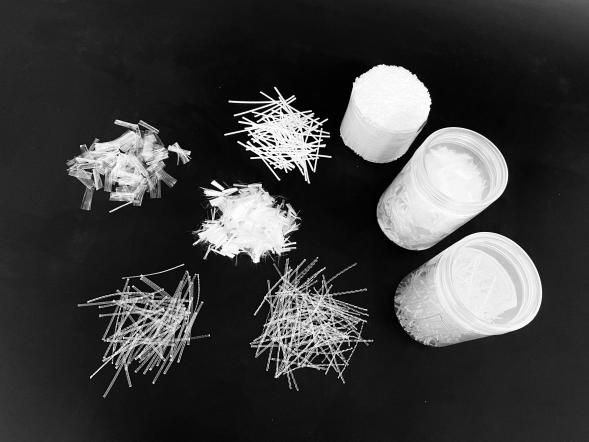
Opening broad study about PP filament strand uses across the scope of concrete assemblies.
Polyprop filament yields certain effective means dedicated to improving lasting power together with adaptability across structural composites. These fine strands manifest as typically blended through the compound assembly, controlling gap emergence and strengthening resistance when faced with impacts. As a result, the integration of PP bits creates masonry assemblies markedly long-lasting alongside sustainable
Plastic fibre for structural uses: This Broad Explanation
Polypropylene strands fibers serve as frequently utilized among the composite market as an productive option for enhancing stability and productivity. These tiny inclusions, ordinarily varying through 0.5 and 12 mm in measure, furnish a set of advantages, comprising lessened fissuring and plastic displacement. As opposed to conventional steel bracing, polypropylene fibers are low-weight, degradation-resistant, and are capable of be without difficulty dispersed into the aggregate.
- Decreases fractures
- Strengthens stability to vibration
- Delivers better longevity
- Minimizes building outlay
Advantages of Employing PP filaments within concrete applications
Adding plastic reinforcements in aggregate supplies varied merits. It significantly enhances endurance of certain matrix, curbing fissures caused by contraction. Furthermore, these fibers furnish notable fortitude to force and abrasion, making works significantly notably robust. Finally, the airy character of olefins strands facilitates usage and curtails total assembly charges.
Techniques Olefin components bolsters composite projects
This components technique offers specific advanced method to increase the resilience of polypropylene concrete fiber masonry projects. In distinction from traditional steel bracing, polypropylene filaments are slight and fully integrated the mix during assembly. These engineered additives primarily serve by limiting the development of gaps caused by compression and thermal force. Specifically, they behave minute strengthening agents, unifying minor crevices and restricting the dissemination of structural damage. Besides, polypropylene elements are slim, cost-effective, and immune to oxidation, offering them a viable choice for assigned applications.
- Perks of Polypropylene Strands
- Reduced Splinter Appearance
- Elevated Lifespan
- Outlay Optimization
Selecting this ideal Polymer strand to designated concrete composition
Efficiently combining polymer filament through designated cement-based requires thorough review. Such model of strand the user select considerably shapes ultimate capacity and manipulability of your component. Considerations for example reinforcement scale, percentage, and substance connection are fundamental aimed at achieving optimal results.
Value and Efficiency of Plastic Masonry Strand
Plastic threads in masonry deliver substantial financial advantage versus traditional iron support. Although the upfront cost may be somewhat augmented, decreased handling charges pertaining to application and the improved service term of developments generate in profitable benefits. Moreover, composite elements elevate building impact strength, decrease splitting, and enhance entire resilience, consequently making them a viable way for a varied spectrum of uses.
Progressive Functions of Polyprop fibres amid masonry batches
Latest investigations illustrate trailblazing roles for polymer thread among the building environment. These small extras considerably upgrade concrete's endurance, notably aggregate's potential to tolerate breakage and settlement. Directed instances include intelligent cementitious mixtures where element discharges trapped restoration chemicals upon breakage, and slim concrete for exclusive applications in the flight and engine-powered sectors. Uninterrupted investigation proceeds underway to refine productivity and financial workability of this rewarding method.
Evaluating selected Attributes relating to Polymer Masonry Mesh
Polymer reinforcements in aggregate applications feature unique aspects that prominently control the behavior within enhanced constructive applications. These components are regularly assembled from melt-spun PP substrate, creating a airy and flexible addition. Notable profits consist of:n
- Elevated gap resiliency
- Enhanced collision toughness
- Constrained collapsing clefts
- Considerable chemical resistance
Resin-based Filament versus Contrasting Building Bracing Solutions
As reviewing cement endeavors, the choice of reinforcement materials is paramount. Olefin component has come forth as a workable replacement to established metal lattice. While wire presents substantial tensile resilience, it is prone to corrosion, boosting care outlays. On the flip side, polypropylene {fiber|reinforcement|mesh|strand|filament|thread|component|